Losing files on a Mac can happen in an instant, whether it’s an accidental deletion, a failed software update, or an unexpected crash. While many users rely on graphical recovery tools or Time Machine backups, there’s a more technical path often overlooked: using the command line. For those comfortable with Terminal or looking to expand their Mac expertise, command-line file recovery offers a powerful, flexible solution—sometimes even rescuing data that other methods can’t reach. This guide explores how to recover deleted files from a Mac using the command line, empowering you with the knowledge and tools to retrieve your valuable data.
Understanding How Mac Handles Deleted Files
Before diving into recovery commands, it’s crucial to understand what happens when you delete a file on macOS. When you move a file to the Trash and then empty it, macOS doesn’t immediately erase the data. Instead, it marks that space on the drive as available for new data, which means the file can often be recovered—unless it’s overwritten.
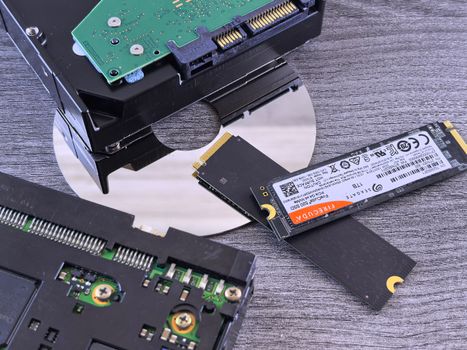
On traditional spinning hard drives, deleted data may linger for weeks or months. On solid-state drives (SSDs), however, the TRIM command can quickly erase deleted data, making recovery much more difficult. According to a 2022 survey from Statista, over 78% of new Macs sold now use SSDs rather than HDDs, which impacts recovery odds.
.png)
Understanding your Mac’s storage type is key:
- SSDs: Deleted files may be unrecoverable if TRIM has run. - HDDs: Higher chance of successful recovery, especially soon after deletion.To check your disk type, open Terminal and run:
diskutil info / | grep "Solid State"
If the result is “Yes,” you have an SSD; “No” means you have a traditional hard drive.
Key Command Line Tools for Mac File Recovery
macOS includes several built-in command-line utilities that can help with file recovery. Additionally, some powerful open-source tools can be installed for advanced cases. Here are the most essential:
1. $1 The gateway to all command-line operations. 2. $1 Useful for searching directories and locating files, including hidden ones. 3. $1 Helps search file contents by keywords or patterns. 4. $1 Move or copy files, crucial for extracting recoverable data. 5. $1 Disk repair tool that sometimes can restore lost directory entries. 6. $1 Open-source tools for deep file recovery, supporting hundreds of file formats.Let’s compare their main uses and capabilities:
| Tool | Purpose | Built-in/External | Best For |
|---|---|---|---|
| ls, find, grep | Searching for lost or hidden files | Built-in | Quick checks, locating misplaced files |
| fsck_hfs | File system repair and directory restoration | Built-in | Fixing directory issues, recovering from corruption |
| testdisk | Partition & file recovery | External | Deep recovery, partition repair |
| photorec | File carving for deleted files | External | Recovering specific file types (photos, docs, etc.) |
Step-by-Step: Recovering Deleted Files with Terminal
Let’s walk through the practical steps of recovering deleted files from your Mac using the command line. Note that the sooner you attempt recovery after deletion, the better your chances—especially on an HDD.
1. $1First, see if the file is still in the Trash (even if the Finder doesn’t show it):
cd ~/.Trash ls -al
If your file is listed, you can move it back to its original location:
mv "deleted_filename" ~/Documents/
2. $1Sometimes files aren’t deleted—they’re just misplaced. Use the find command:
find / -name "filename*" 2>/dev/null
This command searches your entire drive for files with names starting with “filename”.
3. $1If files disappeared after a crash or power failure, directory corruption may be the cause. Reboot your Mac into Single User Mode (hold Command + S at startup) and run:
/sbin/fsck_hfs -fy /dev/disk1s1
Replace “/dev/disk1s1” with your actual disk identifier (check with diskutil list). This process can sometimes restore lost directory entries.
4. $1TestDisk is a powerful open-source tool that works across platforms. To install it, use Homebrew:
brew install testdisk
Then run:
sudo testdisk
Follow the interactive prompts to scan your disk and attempt to recover deleted files or partitions. TestDisk is especially effective at rescuing lost partitions or files from corrupted drives.
5. $1PhotoRec, bundled with TestDisk, specializes in “carving” lost files by searching for file signatures, bypassing the file system entirely. It’s ideal for recovering photos, videos, and documents.
To launch:
sudo photorec
Choose your drive, select the file types you want to recover, and specify an output directory (not on the same drive to avoid overwriting data).
Advanced Recovery: Using dd and File Carving Techniques
If your drive is failing or you want to avoid further data loss, consider making a full disk image before attempting recovery. The dd command can clone your drive sector-by-sector:
sudo dd if=/dev/disk1 of=~/Desktop/drivebackup.dmg bs=4m
- if= input file (your disk identifier) - of= output file (location of backup) - bs= block size (4 MB recommended)Once you have an image, you can run TestDisk or PhotoRec on this backup, preserving your original drive and minimizing the risk of overwriting.
$1 The dd command can save data even from drives with failing sectors, as long as the hardware is still accessible.
Common Pitfalls and How to Avoid Them
While command-line recovery is powerful, it comes with risks. Here’s how to boost your success rate and avoid making things worse:
- $1 Writing new files can overwrite deleted data, making recovery impossible. - $1 Always use an external disk or USB stick as the recovery destination. - $1 Accidentally cloning or writing to the wrong disk can destroy data. - $1 Download only from trusted sources; malicious recovery tools can cause more harm.A 2023 study by Data Recovery Digest found that over 65% of failed DIY recoveries stemmed from users writing new data to the drive before attempting recovery—so always act quickly and carefully.
When Command Line Recovery Is (and Isn’t) the Best Choice
Command-line recovery isn’t for everyone, but it offers distinct advantages in certain situations:
$1 - When you need to recover data from a non-booting Mac (using Single User Mode or Recovery Mode) - When GUI-based recovery tools are unavailable or fail to detect your lost files - For power users comfortable with Terminal and advanced troubleshooting $1 - If you have a recent Time Machine or cloud backup - If the drive is physically damaged and making clicking noises (seek professional help) - If you’re not comfortable with command-line syntax and risk making mistakesCommand-line recovery can be faster and more flexible than graphical tools, but mistakes can be costly. Always weigh your comfort level and the value of your data.
Final Thoughts on Command Line File Recovery for Mac Users
Recovering deleted files from a Mac using the command line is an advanced but highly effective approach, especially when traditional methods fall short. By using built-in utilities and open-source tools like TestDisk and PhotoRec, you can often retrieve files that would otherwise be lost forever. Remember to act quickly, avoid writing new data to the affected drive, and always keep backups for future peace of mind. With practice and caution, the command line becomes a powerful ally in your Mac data recovery arsenal.