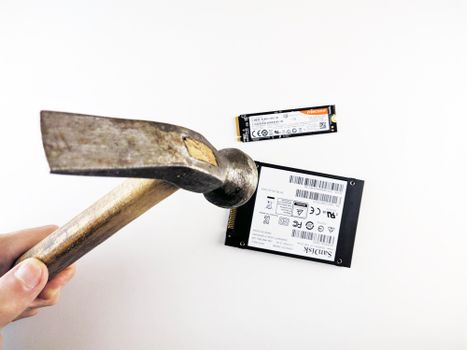
If you’re a Mac user, you’ve likely heard about Time Machine—the built-in backup solution designed by Apple to make data protection simple and powerful. But beyond simply setting it up, do you know how to harness Time Machine for effective data recovery when disaster strikes? Whether you’re facing accidental file deletion, a corrupted document, or even a full system crash, mastering Time Machine’s data recovery features can save you time, stress, and irreplaceable memories.
In this guide, we’ll break down not just how to use Time Machine, but how to maximize its recovery capabilities for different real-world scenarios. We’ll reveal practical tips, common pitfalls, and expert strategies to ensure that your data recovery with Time Machine is as smooth and successful as possible.
The Power of Time Machine: Beyond Basic Backups
Time Machine debuted with Mac OS X Leopard in 2007, revolutionizing backup for everyday users. Unlike traditional backup software, Time Machine creates incremental backups of your entire system automatically and stores them on an external drive or network-attached storage (NAS). This means you can restore individual files, folders, or even your entire Mac to a previous state.
.png)
According to a 2023 Statista survey, 64% of Mac users rely on Time Machine for backup, making it the most widely used data protection tool in the Apple ecosystem. Yet, only 48% of those users know how to fully leverage Time Machine’s recovery features, beyond simply restoring deleted files.
Here’s what sets Time Machine apart for data recovery:
- Hourly, daily, and weekly snapshots for granular restoration - A user-friendly interface for browsing past versions of files and folders - Full-system restore capability, great for recovering from hardware failures or malware attacks - Compatibility with Migration Assistant for seamless transfers to new MacsBut how do you translate these features into real-world data recovery success? Let’s explore.
Preparing Your Mac for Optimal Time Machine Recovery
Before you ever need to recover data, it’s crucial to set up Time Machine correctly. Many recovery headaches stem from improper setup or overlooked details.
1. $1 Apple recommends using an external drive with at least twice the capacity of your Mac’s internal storage. For example, if your Mac has a 512 GB SSD, aim for a 1 TB Time Machine drive. Drives formatted as APFS or Mac OS Extended (Journaled) are fully supported. 2. $1 Time Machine performs best with regular access to its backup disk. If you use a portable Mac, try to connect your drive at least once a day. 3. $1 Protect your backups with encryption—especially if you store sensitive documents. Encryption is available when you first set up the backup disk. 4. $1 By default, Time Machine backs up almost everything. But you can exclude folders (like Downloads or third-party backup folders) to save space. 5. $1 Use the Time Machine menu bar icon to check backup status. Occasionally review your backup disk in Disk Utility for errors.A well-prepared Time Machine backup is your safety net. Now, let’s look at how to recover from the most common data loss scenarios.
Restoring Individual Files and Folders: Step-by-Step
One of Time Machine’s greatest advantages is its ability to recover specific files or folders without rolling back your entire system. Here’s how to do it with maximum effectiveness:
1. $1 Click the Time Machine icon in your menu bar and select "Enter Time Machine." You’ll see a timeline on the right side of your screen. 2. $1 Use the timeline or on-screen arrows to go back to the date before you lost the file. Time Machine will show you the contents of your folders at that point in time. 3. $1 You can manually browse folders or use the search bar to find the file or folder you want to recover. 4. $1 Select a file and press Spacebar to preview its contents—especially useful for documents and photos. 5. $1 Once you’ve found the correct version, click "Restore." The file will be copied back to its original location. If a file with the same name exists, you can choose to keep both versions.$1 Time Machine retains hourly backups for 24 hours, daily backups for the past month, and weekly backups for all previous months. This gives you a wide range of recovery options, even for files deleted weeks or months ago.
Recovering Your Entire Mac With Time Machine
For more severe issues—like a failed hard drive, malware infection, or major software corruption—you may need to restore your entire Mac from a Time Machine backup. This process is known as a "full system restore" and is surprisingly straightforward.
$1
1. $1 Restart your Mac and immediately hold down Command (⌘) + R until you see the Apple logo or a spinning globe. 2. $1 If it’s not already connected, plug in your Time Machine backup disk. 3. $1 In macOS Recovery, choose this option and click Continue. 4. $1 Pick your backup disk, then select the date and time of the desired backup. 5. $1 Follow the on-screen instructions. Your Mac will be restored to the exact state it was in at the time of that backup—including all apps, settings, and files.$1 According to Apple’s support documentation, a full Time Machine restore typically takes 1-2 hours per 100 GB, depending on drive speed and Mac model.
$1 If you’re migrating to a new Mac, you can use Migration Assistant during setup to transfer your Time Machine backup to the new machine, preserving all your data and settings.
Comparing Time Machine Recovery to Other Mac Data Recovery Methods
While Time Machine is powerful, it’s not the only way to recover data on a Mac. Here’s how it compares to other popular options:
| Method | Best For | Ease of Use | Granularity | Speed | Cost |
|---|---|---|---|---|---|
| Time Machine | Routine backups, accidental deletions, full system restores | Very Easy | Files, folders, or entire system | Fast (once set up) | Free (with external drive) |
| Third-Party Recovery Software | Unbacked, deleted, or corrupted files | Moderate | Files and partitions | Varies | $50–$100+ |
| iCloud Drive | Documents and desktop files | Easy | Specific synced files | Fast | Free/Paid (storage limits) |
| Manual Backups | Specific files/folders | Easy | Manual selection | Manual | Free |
Time Machine stands out for its automation, depth (backing up everything, not just select folders), and seamless integration with macOS. However, it cannot recover files that were never backed up. For files deleted before Time Machine was enabled or from excluded folders, third-party recovery tools may be needed.
Advanced Time Machine Recovery Tips and Troubleshooting
Even with a reliable backup, data recovery can go wrong. Here are some advanced tips to ensure the best possible outcome:
1. $1 If you use more than one backup disk, you can switch between them in Time Machine’s interface. This is useful if one backup is corrupted or missing certain files. 2. $1 When restoring files, right-click and select "Restore to" if you want to place files in a new folder, avoiding overwriting current data. 3. $1 If Time Machine says it can’t find your backup disk, check USB connections, power supply, and disk formatting. Use Disk Utility to run First Aid on the backup drive. 4. $1 If your Time Machine backup is damaged, you may be able to use third-party disk repair tools (such as DiskWarrior) to recover historical data. 5. $1 Hold Option and click the Time Machine menu bar icon, then select "Verify Backups" to check for errors. 6. $1 Time Machine stores multiple versions of files. If you need an older draft, simply restore an earlier backup from the timeline. 7. $1 Time Machine automatically deletes the oldest backups when your disk fills up, but you can manually delete unnecessary snapshots by entering Time Machine, selecting the unwanted backup, and choosing "Delete Backup."Ensuring Long-Term Data Safety with Time Machine
Effective data recovery isn’t just about restoring files after a loss—it’s about building a sustainable backup habit. Here’s how to ensure Time Machine keeps protecting you for years to come:
- $1 For extra resilience, use two backup drives, swapping them weekly or monthly. This guards against drive failure or theft. - $1 Keep one backup in a different physical location to protect against fire or flood. - $1 Every few months, simulate a recovery by restoring a file or two. This verifies that your backups are working and gives you confidence in the process. - $1 If you upgrade your Mac’s storage, remember to upgrade your backup drive as well to ensure enough space for snapshots. - $1 Keep an eye on Apple’s support pages and community forums for updates and best practices, especially after major macOS upgrades.By treating Time Machine as an active part of your digital life—not just a set-and-forget tool—you’ll be ready to recover from almost any data loss scenario.
Your Roadmap to Stress-Free Mac Data Recovery
Time Machine remains one of the most user-friendly and robust backup and recovery solutions available to Mac users. By taking a proactive approach—choosing the right hardware, setting up backups correctly, and familiarizing yourself with both basic and advanced recovery strategies—you can ensure your important files, photos, and projects are never more than a few clicks away, even after unfortunate mishaps.
Remember: the best time to prepare for data loss is before it happens. With Time Machine as your ally, you can use your Mac with confidence, knowing your digital life is protected and recoverable.